Say goodbye to lighter fluid.
How To Use A Charcoal Chimney Starter
How to use a charcoal chimney starter
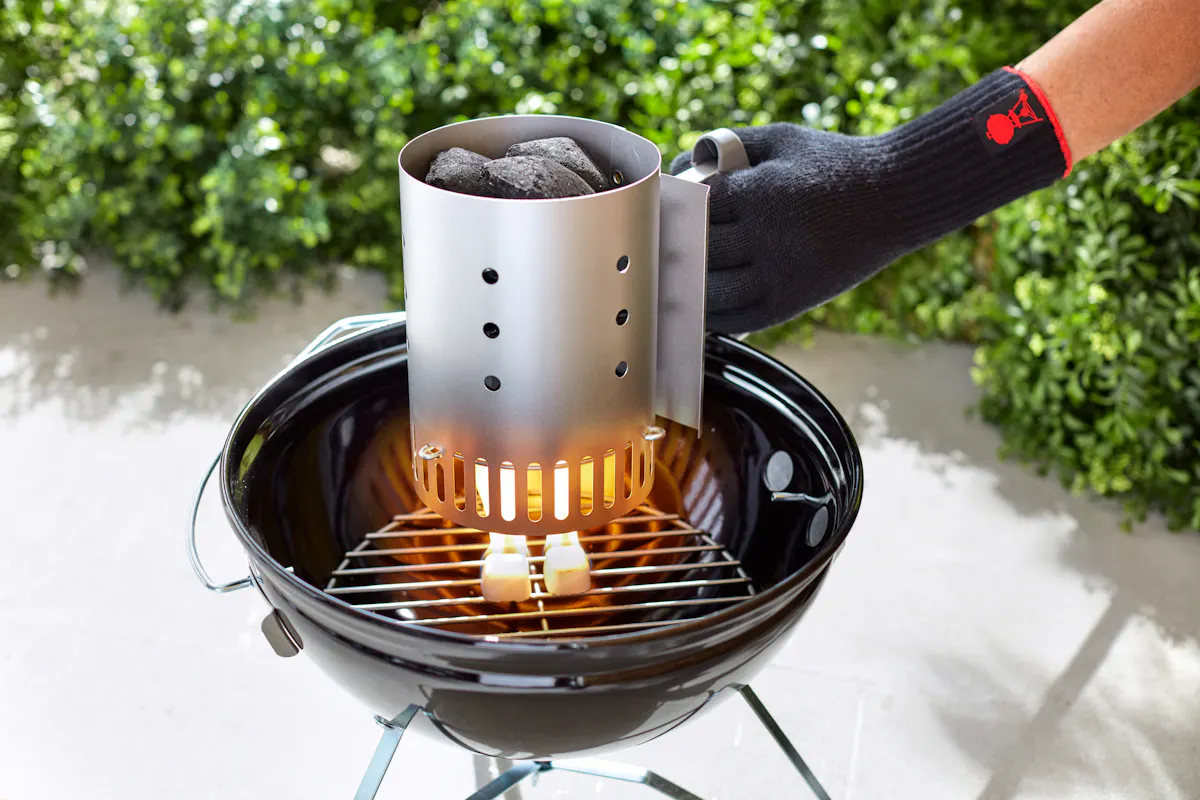
A charcoal chimney starter is one of the simplest ways to get your barbecue fired up. No lighter fluid, no complicated technique – just evenly lit charcoal and a barbecue that’s ready for cooking.
Whether you’re planning a quick midweek meal or getting everyone together for a long afternoon around the barbecue, learning how to use a chimney starter makes lighting charcoal quick, simple and reliable.
Here’s everything you need to know.
What is a charcoal chimney starter?
A chimney starter is a metal cylinder designed to light charcoal quickly and evenly.
A grate inside the chimney starter supports the charcoal, while the firelighter sits below it on the barbecue’s charcoal grate. As the fire burns, ventilation holes allow air to flow through the chimney, helping the charcoal ignite from the bottom upwards until it is glowing and ready to cook over.
Simple design. Serious heat.
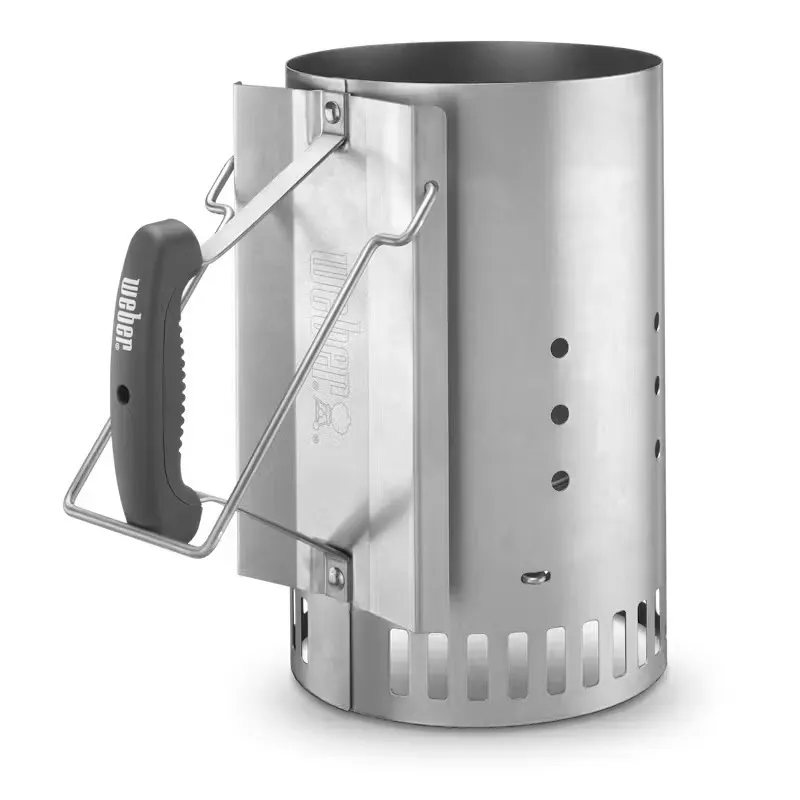
Weber Rapidfire Chimney Starter
The Weber Rapidfire Chimney Starter is designed to make lighting charcoal simple and efficient. Its cone-shaped grate helps bring more charcoal closer to the flames, while the cylindrical design allows hot air to circulate around the coals for a faster, more even light. Strategically placed vents encourage airflow, helping the fire build consistently.
Why use a chimney starter?
Lighting the barbecue is part of the ritual. A chimney starter simply makes that part easier.
It can help you:
- Light charcoal quickly and evenly
- Measure the amount of fuel you need
- Avoid using lighter fluid
- Create the right charcoal arrangement for different cooking methods
- Get consistent results from one barbecue to the next
Once the coals are glowing, you can arrange them for direct or indirect heat and get on with the best bit: cooking, eating and sharing a meal with good company.
What you’ll need
Before you start, have everything within easy reach. In addition to your charcoal barbecue and chimney starter, you’ll need:
- Barbecue fuel: charcoal briquettes or lumpwood charcoal
- Barbecue lighter cubes or another suitable firelighter
- Long matches or a barbecue lighter
- Heat-resistant barbecue gloves or mitts
If you’re new to charcoal barbecuing, the Weber Rapidfire Chimney Starter Set brings together the essentials for getting your barbecue lit, including a chimney starter and lighter cubes. Available through selected retailers, it’s a simple way to have the key tools you need to get started.
How much charcoal should you use?
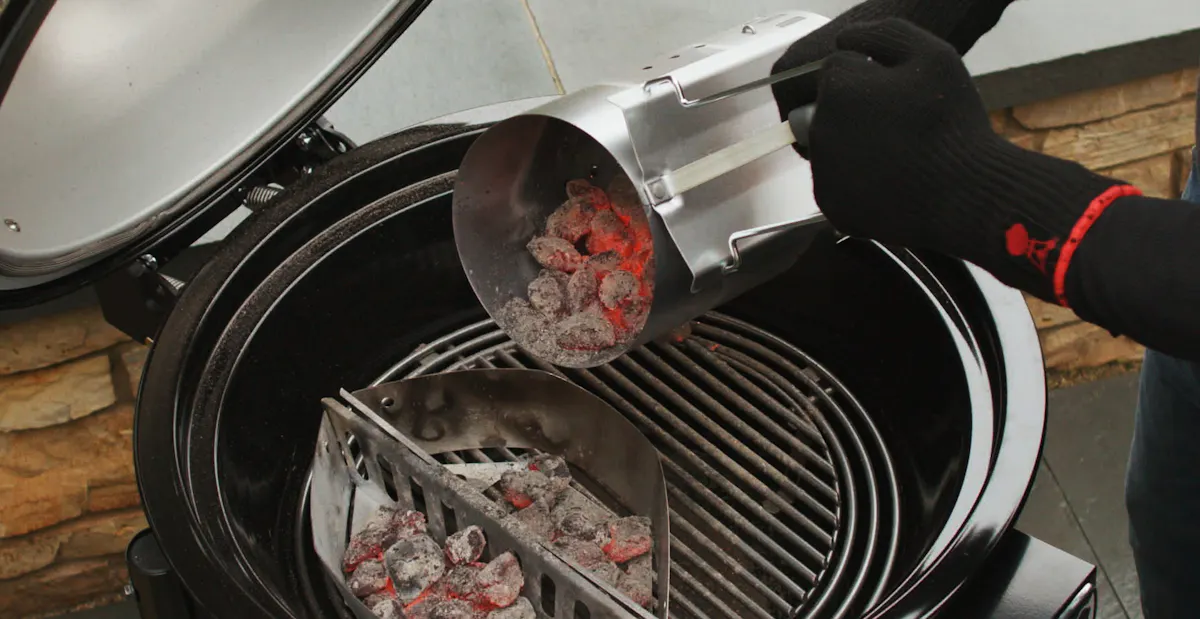
You don’t always need to fill your chimney starter to the top. The amount of charcoal you use depends on what you’re cooking and the cooking method you have planned.
As a general guide:
- Around one-third of a chimney: useful for low-and-slow cooking, such as smoking a large joint of meat for several hours at a low temperature (you’ll need to top up the coals every hour or so to maintain temperature).
- Around half a chimney: suitable for longer cooks using indirect heat, such as roasting a whole chicken or cooking larger cuts away from the coals.
- A full chimney: ideal when you need high heat for direct cooking, such as searing steaks or quickly barbecuing burgers and vegetables.
Using charcoal for direct and indirect heat
The amount of charcoal you need will also depend on whether you’re cooking directly over the coals or using indirect heat.
For direct heat cooking, you’ll typically use more charcoal to create a strong, even heat across the cooking area. For indirect heat cooking, you’ll use fewer lit coals and may need to add more during longer cooks to maintain the temperature.
For example, on a 57 cm charcoal barbecue:
- For direct heat cooking, a full load of Weber briquettes (around 30 briquettes) provides a strong, even cooking temperature.
- For indirect cooking, start with around 15 briquettes per side and add more as needed during longer cooks
Always check the instructions for your barbecue and recipe, as fuel requirements can vary according to barbecue size, cooking method and conditions.
How to use a chimney starter – step by step
Getting your charcoal going is straightforward. Follow these steps to build an even fire and get your barbecue ready for whatever’s on the menu.
1. Prepare your barbecue
Place your barbecue outdoors on a stable, level and heat-resistant surface, away from anything flammable.
Remove the lid and cooking grate so you can access the charcoal grate below.
Open the barbecue vents to allow plenty of airflow.
2. Measure your charcoal
Fill the chimney starter with the amount of briquettes or lumpwood charcoal you need for your cook.
If you’re cooking at high heat, that might mean filling the chimney. For a lower-temperature or longer cook, you may need considerably less.
3. Light the firelighters
Place two or three lighter cubes on the charcoal grate and light them. Position the filled chimney starter directly over the flames so the heat can begin working its way up through the charcoal.
Now let airflow do the work. Cool air is drawn in through the lower vents while heat and flame rise through the chimney, lighting the charcoal from the bottom upwards.
There’s no need to stir the charcoal or keep moving the chimney.
4. Wait until the charcoal is ready
Keep the chimney starter in place until the charcoal is fully lit. You’ll know it’s ready when the charcoal has developed a coating of white ash and the fire has worked its way through the chimney starter.
The exact lighting time can vary depending on the type and amount of charcoal you’re using, as well as the weather conditions. Rather than relying only on the clock, use the appearance of the charcoal as your guide.
Before cooking, make sure the lighter cubes have completely burned away and the charcoal has ashed over. Once ready, carefully pour the hot charcoal into your barbecue and arrange it according to your chosen cooking method.
5. Pour out the charcoal
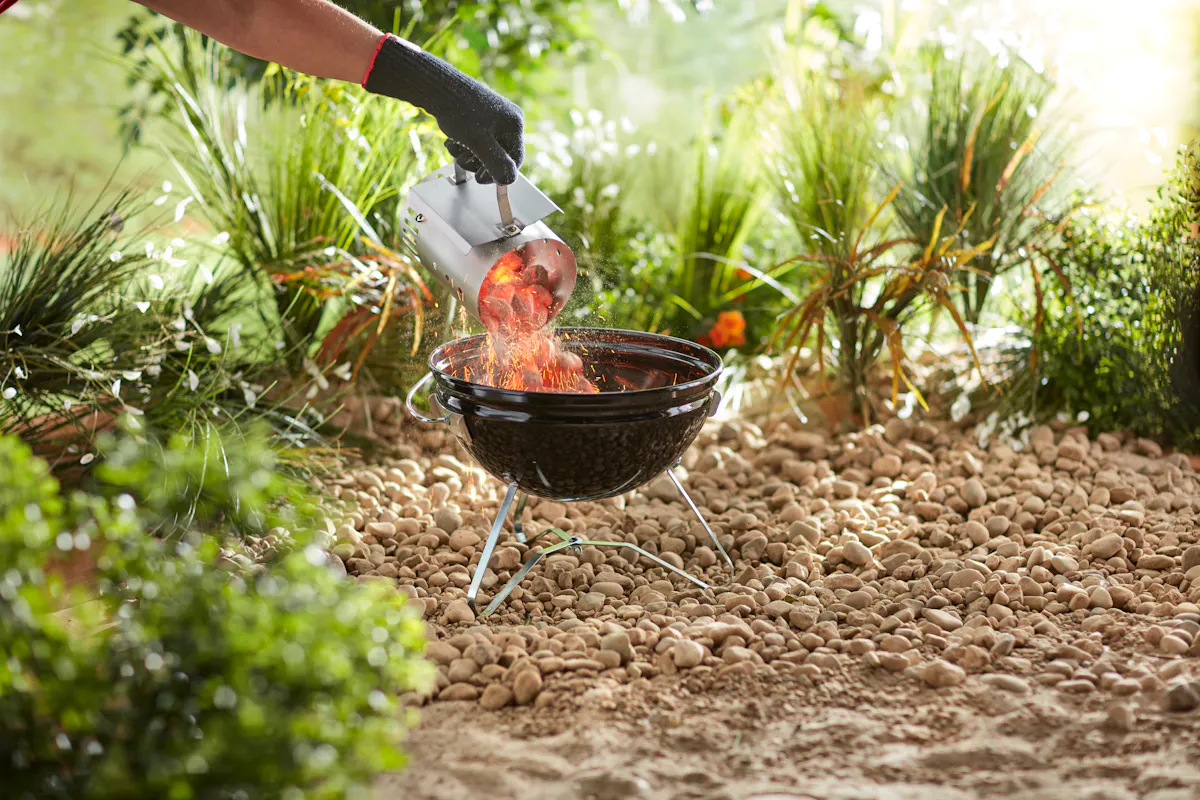
Put on heat-resistant barbecue gloves or mitts.
Holding the chimney securely by its handles, carefully pour the hot charcoal onto the charcoal grate. Be aware that sparks can rise as you pour.
How you arrange the charcoal depends on how you want to cook.
For direct heat: spread the hot charcoal across the area where you’ll be cooking. This gives you strong heat directly beneath the food and works well for foods that cook relatively quickly.
For indirect heat: arrange the charcoal to one or both sides of the barbecue, leaving an area without charcoal directly underneath the food. This creates gentler heat for larger foods and longer cooking times.
6. Preheat the barbecue
Put the cooking grate back in place and close the lid.
Allow the barbecue and cooking grate to heat before adding your food. You can then adjust the vents according to the temperature and cooking method you need.
And that’s it. The fire is lit, the barbecue is hot and everyone suddenly has a very good reason to gather outside.
How do you know when the charcoal is ready?
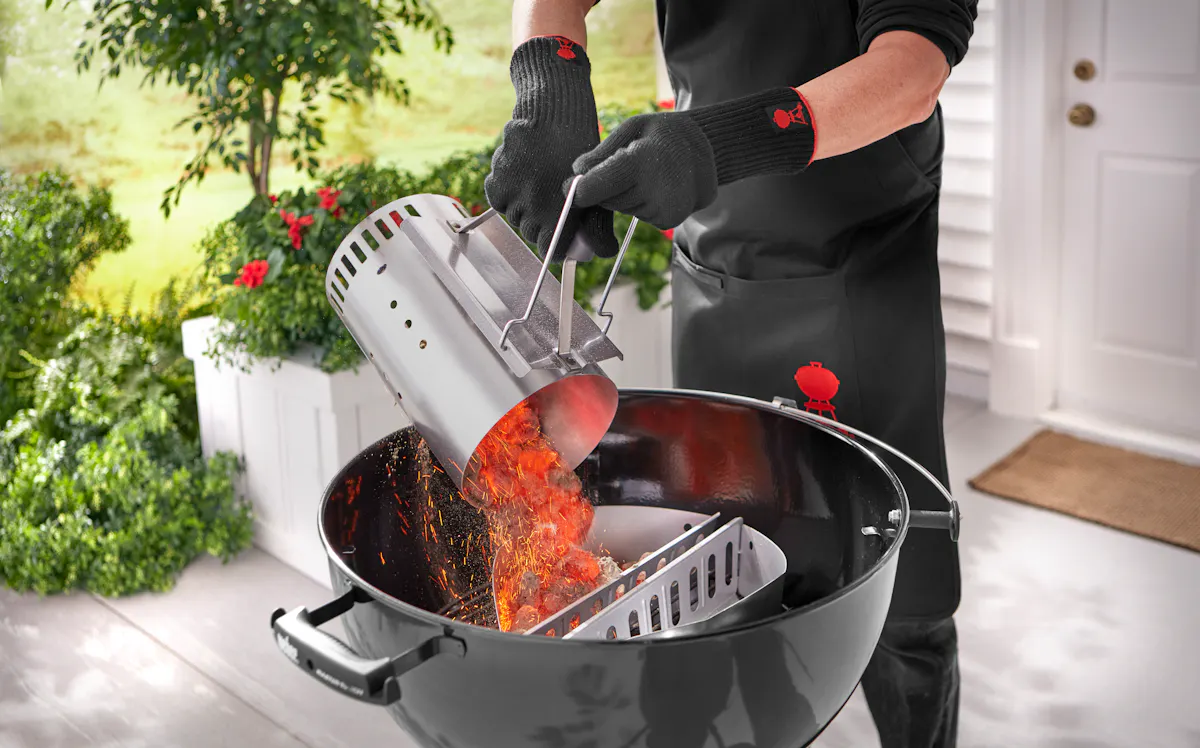
The appearance of your charcoal is the best indicator that it’s ready. Once the fire is established and the coals have developed a coating of ash, you can carefully transfer them to your barbecue.
After pouring, give the charcoal time to settle and the barbecue time to preheat before cooking. This helps create a consistent cooking temperature and better results on the grill. Don’t cook before the coals are coated in ash, as the charcoal may affect the flavour of your food.
Chimney starter safety tips
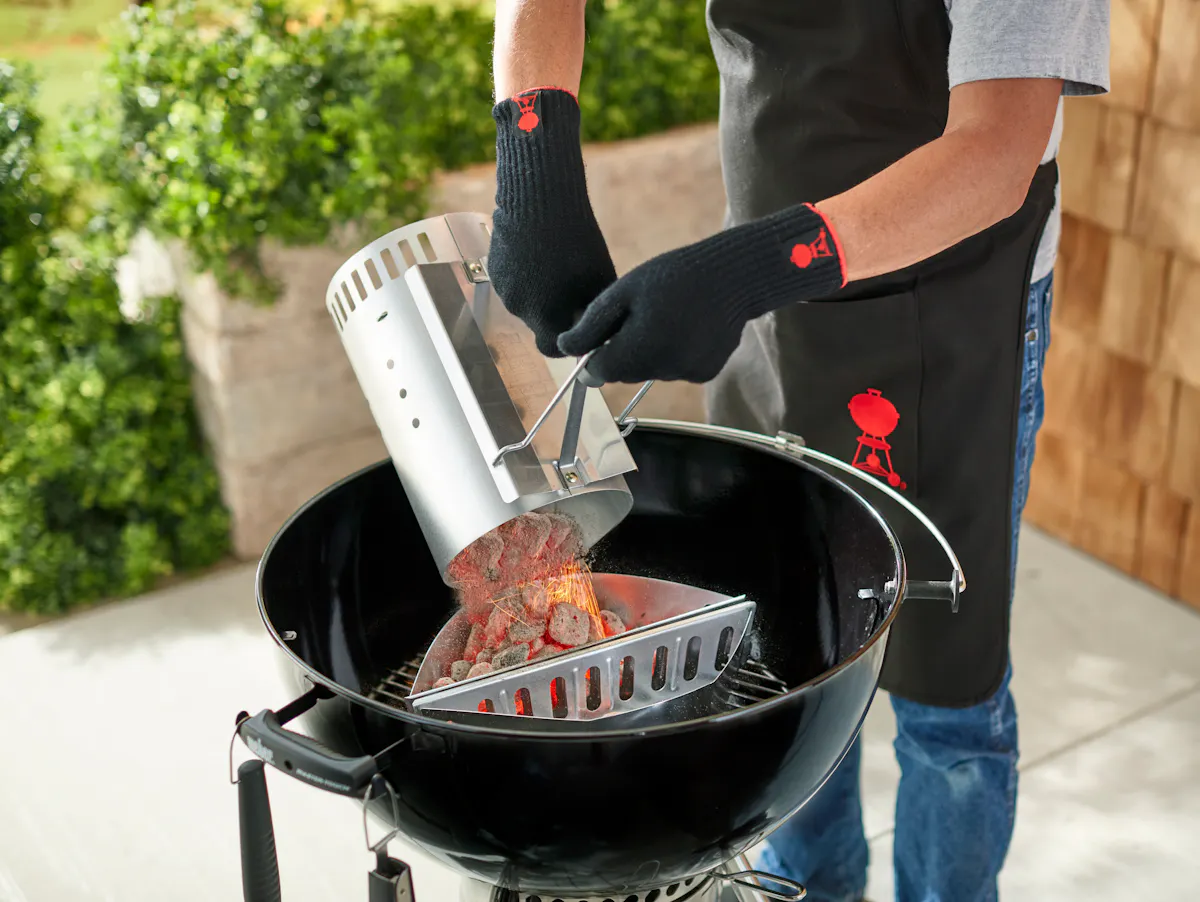
A chimney starter gets extremely hot, so a few simple precautions matter.
- Always use it outdoors: Never light charcoal inside a house, garage, tent, caravan, vehicle or other enclosed space. Burning charcoal produces carbon monoxide.
- Light it on the charcoal grate: A chimney starter can become extremely hot. We recommend lighting it on the charcoal grate inside the barbecue rather than directly on concrete, where trapped moisture can heat rapidly and cause the surface to crack.
- Wear heat-resistant barbecue gloves or mitts: Use them whenever handling a hot chimney starter or pouring lit charcoal.
- Keep your face and body away from the top: Hot air, flames and sparks can rise from the chimney.
- Keep children and pets at a safe distance: The chimney remains extremely hot after the charcoal has been poured out.
- Put the empty chimney somewhere safe: Place it on a stable, non-combustible, heat-resistant surface where nobody can accidentally touch or knock it over.
- Never use petrol, alcohol, or lighter fluid to light charcoal: These substances can create dangerous flare-ups and should never be used with a chimney starter or barbecue. Always use suitable barbecue firelighters and follow the safety instructions supplied with your equipment.
- Never use self-lighting charcoal in a chimney starter: Self-lighting charcoal already contains an accelerant, so using it in a chimney starter can cause the charcoal to ignite too quickly and unpredictably.
And, as always, follow the safety instructions supplied with your barbecue, chimney starter, charcoal and firelighters.
How to use a chimney starter in wind or rain
A little less-than-perfect weather doesn’t have to stop the barbecue.
In windy conditions, position the barbecue somewhere sheltered while maintaining a safe clearance from any combustible materials. Avoid enclosed spaces, and watch for sparks when pouring the charcoal.
Damp conditions can make some traditional lighting methods more difficult. Purpose-made lighter cubes can help because they’re designed to keep burning in challenging conditions.
Never move a lit barbecue indoors because of rain or bad weather.
Common chimney starter mistakes
- Using too much charcoal: A full chimney isn’t necessary for every cook. Match the amount of fuel to the cooking method and the food you’re preparing.
- Pouring the charcoal too soon: Give the fire time to become established. Look for glowing coals and a coating of ash over the charcoal.
- Restricting the airflow: Fire needs oxygen. Make sure the vents in the barbecue and chimney starter aren’t obstructed while lighting.
- Lighting the chimney on an unsuitable surface: Use the charcoal grate of the barbecue rather than placing a lit chimney starter directly on paving, concrete, timber or another potentially heat-sensitive surface.
- Forgetting how hot the empty chimney remains: The charcoal may have left the chimney, but the heat hasn’t. Treat an empty chimney starter as hot until it has cooled completely.
How to use a chimney starter: FAQs
How long does a chimney starter take?
There’s no single time that applies in every situation. Fuel type, fuel quantity and weather conditions can all affect lighting time. Watch the charcoal rather than just the clock: when the fire is established and the upper coals are beginning to catch and ash over, you’re ready for the next step.
Can I add unlit charcoal after emptying the chimney?
Depending on the cooking method, yes. Some longer cooks use a combination of lit and unlit fuel. Follow the instructions for your barbecue and the cooking method you’re using.
Should I clean my chimney starter?
Once it is completely cold, remove loose ash and charcoal dust. Keeping the ventilation holes clear will help maintain good airflow the next time you light it.
Can you use newspaper in a chimney starter?
Yes. Many chimney starters can be lit using loosely crumpled newspaper placed beneath the chimney starter, with the charcoal loaded above.
However, purpose-made barbecue lighter cubes offer a simple alternative and can be particularly useful when conditions are damp or windy. Whichever method you use, always follow the instructions supplied with your chimney starter and barbecue.
Can you use lighter fluid with a chimney starter?
Never use lighter fluid, petrol, alcohol or other highly volatile fluids to light charcoal.
A chimney starter is designed to light charcoal using airflow and a suitable firelighter, such as lighter cubes. Adding accelerants can cause flames to flare unpredictably and create a safety hazard. These fluids can also collect in the ash catcher and create a fire below the barbecue bowl.
A chimney starter and suitable firelighters provide a simple and controlled way to get your charcoal ready for cooking.