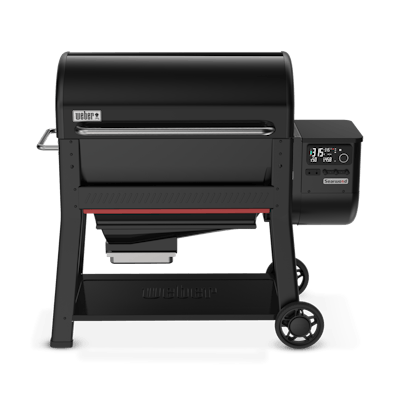
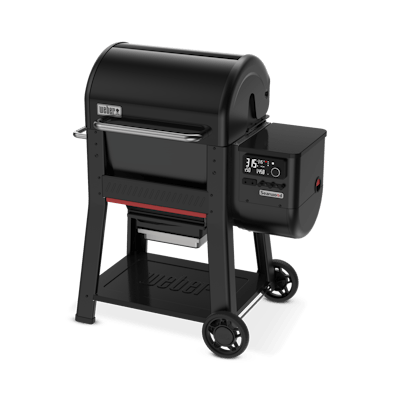
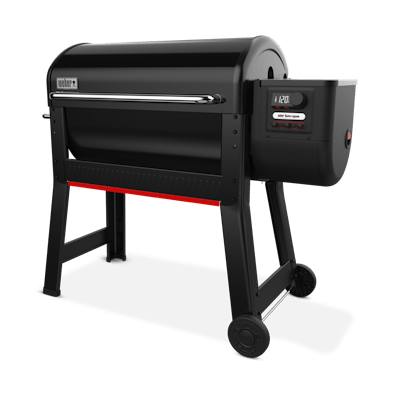
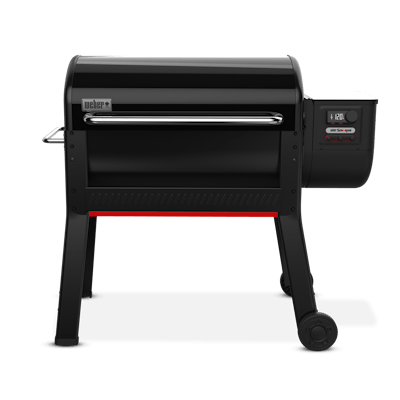
With Weber wood pellet grills like the Searwood® series or Weber Smoque, you deliver smoky flavor to your favorite grilled meals. Compare the lineup and pick the perfect pellet model for you – with smart app control for the ultimate BBQ.

Wood Pellet Grills & Smokers for Authentic Wood-Fired Flavor
Wood Pellet Barbecues
4 Results


Frequently Asked Questions (FAQ)
Wood pellet barbecues use food-grade wood pellets fed automatically into a burn pot, with digital controllers managing temperature by adjusting pellet delivery and airflow. They cook with indirect, circulated heat and smoke, suited to smoking, roasting, baking, and grilling. Gas barbecues use LPG or natural gas with manual burner control and direct radiant heat. Charcoal barbecues use lump charcoal or briquettes with manual vent control. Electric barbecues use electric heating elements. Griddle barbecues cook via direct surface contact.
Yes, wood pellet grills need electricity to operate. While wood pellets provide the heat and smoke that cook your food, electricity powers the key components that make the grill work: the auger feeds pellets from the hopper to the firepot, the fan maintains consistent airflow for combustion, the igniter lights the pellets, and the digital controller regulates the temperature. This combination of electric precision and wood‑fired flavour allows pellet grills to maintain steady temperatures with minimal effort. You'll need access to a standard outdoor mains power supply to use a pellet grill.
Wood pellet barbecues use automated temperature control, feeding pellets as needed to maintain your set temperature with minimal effort. This makes them ideal for low‑and‑slow cooking like brisket or ribs, delivering consistent wood‑fired smoke flavour. Gas barbecues offer quick preheating and precise burner control for convenient, clean cooking. Charcoal barbecues provide traditional smoky flavour and hands‑on heat management through vents and charcoal placement. Pellet barbecues require electricity to operate, while gas and charcoal do not. Each type delivers excellent results—your choice depends on your preferred level of control, flavour, and cooking style.
Wood pellet barbecues excel at low-and-slow cooking, making them ideal for brisket, ribs, pulled pork, pork shoulder, chicken, and turkey. They also deliver excellent results with fish such as salmon or trout, vegetables like peppers and tomatoes, and roasts including beef, pork, and lamb. The key strengths are consistent wood-fired smoke flavour and steady temperature control that maintains your set heat for hours with minimal intervention. While pellet barbecues can also grill and sear, their real advantage lies in long, slow cooks where rich smoke flavour and reliable heat create tender, flavourful results with very little effort.
Yes. They perform well in cool, damp conditions, but you must keep your pellets completely dry in a sealed container. Use a fitted cover and allow for slightly longer preheating times in cold weather.
Yes, pellet grills are easy to use thanks to digital temperature control and automated pellet feeding. You set your desired temperature using the digital controller, and the grill maintains it automatically by feeding pellets as needed. This reduces hands-on fire management compared to charcoal, as there is no manual charcoal lighting or vent adjusting. However, you will still need to monitor the pellet hopper level and refill it as needed, plus clean ash periodically. The automated system makes pellet grills beginner-friendly while still delivering excellent wood-fired flavour with less effort than traditional charcoal smoking.