Top maintenance tips for a charcoal barbecue
How to clean a charcoal barbecue
There is something special about cooking over charcoal: the glow of the coals, the sizzle of the first sear and the smoky flavour that brings everyone to the table. A clean barbecue helps keep every cook tasting just as good as the first.
The good news is that a Weber charcoal barbecue does much of the work for you. Preheating with the lid on burns away most food residue from the cooking grate, and many models have a built-in ash cleaning system. Brush the grate every time you cook and empty the ash once it is completely cold.
Then give your barbecue a thorough clean a few times a year: at the start of the season, every few months if you grill regularly and before storing it for a long period.
- Tools you’ll need for the job
- How to clean your charcoal barbecue, step by step
- Caring for your charcoal barbecue
- What not to use on your barbecue
- Cleaning a charcoal barbecue: FAQs
Tools you’ll need for the job

A great cook starts with the right tools, and so does a great clean. Explore Weber's range of barbecue cleaning and care products, or keep everything in one place with the Cleaning Kit for Charcoal Barbecues. Before you begin, make sure you have these essentials to hand:
- Gloves: Protect your hands from ash, grease and cleaning products while you work.
- Grill brush: A grill brush lifts food residue from the cooking grate and loosens deposits inside the lid and bowl. Before each use, check the brush for loose or damaged bristles and replace it if you spot any. After brushing, look over the grate before you add food to make sure nothing has been left behind. If you barbecue regularly, expect to replace your brush a couple of times a year.
- Sponge: Use the coarse side on the grate and the fine side on the lid, bowl and other surfaces.
- Weber cleaning sprays: Our cleaners are made for the materials and finishes on your Weber barbecue, so you can clean thoroughly and know the finish is in safe hands. Choose the one that matches the surface:
- Grate Cleaner is a fine mist for the cooking grate and the parts inside your barbecue. Spray it on and leave it for 30 seconds to loosen grease and food residue, then wipe clean. It’s biodegradable, with no hazardous ingredients.
- Enamel Cleaner is for the enamelled lid and bowl, inside and out. Spray it onto the barbecue once it’s cold, then wipe it off to lift grease and dirt and bring back the shine.
- Microfibre cloth: Use it with the Enamel Cleaner to wipe and polish the exterior without leaving scratches.
- A metal container with a lid: Gives cold ash a safe place to go before disposal.
How to clean your charcoal barbecue, step by step
These steps work for our kettle and portable charcoal barbecues. If you have a Smokey Mountain Cooker or Summit Kamado, your owner’s manual covers any extra steps needed for your model.
1. Let everything cool completely
Safety comes first. When you finish cooking, close the lid and all the vents to starve the coals of oxygen and put them out. Coals and ash can stay hot for many hours, so wait until everything is completely cold before you start.
Never use water to put out the coals inside your barbecue, as this can damage the enamel.
2. Remove the grates and clear the ash
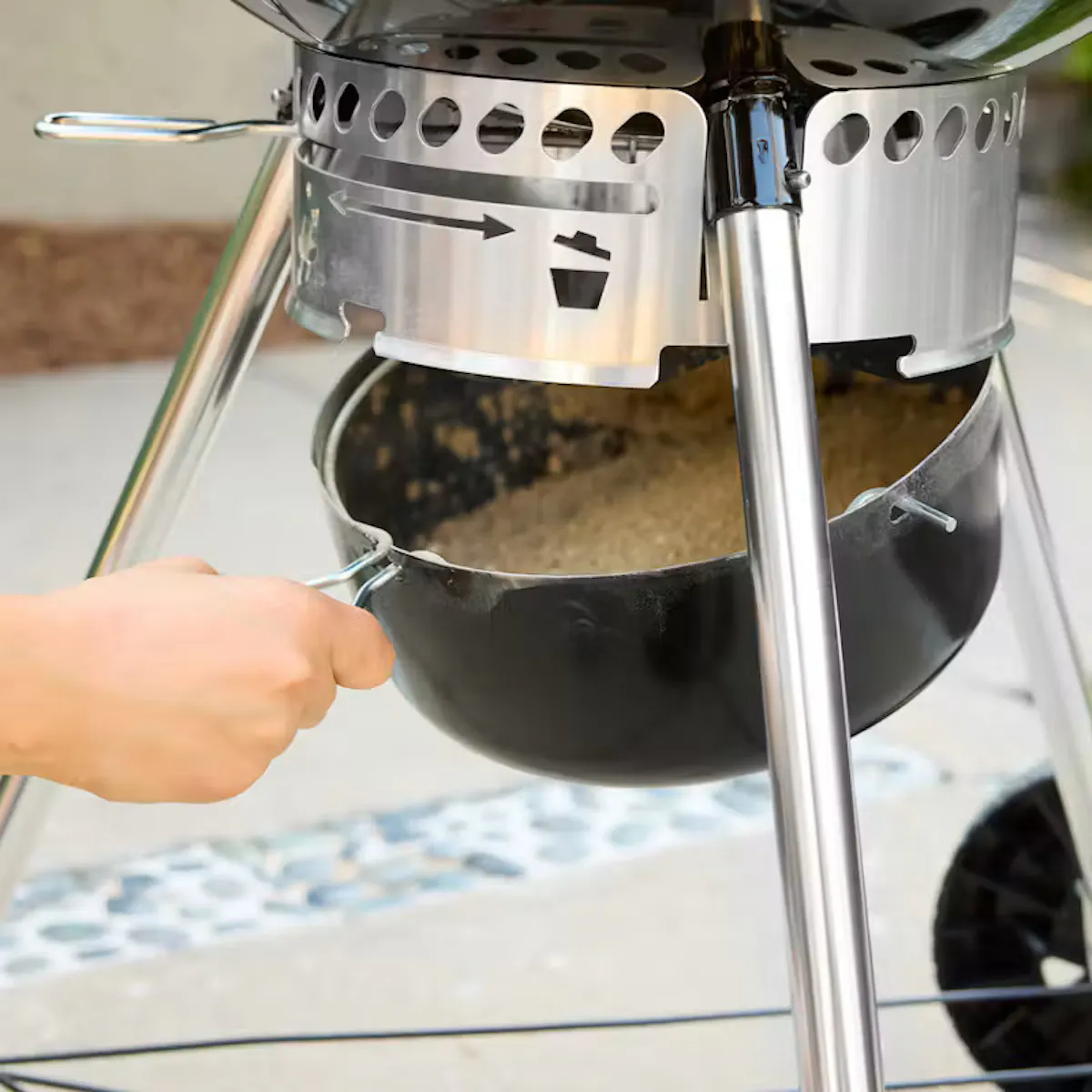
Lift out the cooking grate and the charcoal grate and set them aside.
Remove the ash and any old charcoal from the bottom of the kettle. If your barbecue has the One-Touch cleaning system, move the handle back and forth a few times so the blades sweep the ash through the bottom vents into the ash catcher.
Brush out the lid
The inside of a Weber barbecue lid is finished in baked-on porcelain enamel, which is tough and scratch resistant. In normal use it won’t be damaged by cleaning.
Over time, you may notice flakes on the inside of the lid that look like peeling paint. They aren’t paint. As you cook, grease and smoke vapours slowly oxidise into carbon and settle on the inside of the lid. Brush these carbon deposits away with a grill brush.
To keep build-up to a minimum, wipe the inside of the lid with a paper towel after cooking, while the barbecue is still warm but not hot.
4. Clean the grates
After each cook
Brush along the bars with a grill brush, then turn the grate over and brush the other side. Brush any debris off the charcoal grate at the same time. Before you next cook, check the grate for any loose bristles.
If you’re working with a warm grate, always wear barbecue mitts or gloves that meet the EN 407 standard (contact heat rating level 2 or higher). The vents, dampers, handles and bowl all get hot while you barbecue, so keep your hands and forearms covered.
For a deep clean
Every so often, give the grate a more thorough clean. Spray grate cleaner over the cooking grate and leave it for 30 seconds to loosen grease and food residue. Brush both sides, wipe clean with a wet sponge, rinse and leave it to dry.
Don’t worry if your grate darkens over time. Every mark tells the story of a meal shared, and a well-loved grate cooks just as well.
5. Clean the inside of the bowl
Brush away any loose debris from the inside of the bowl. Then clean the surface with warm, soapy water and the fine side of your sponge to lift any remaining residue. Pay attention to the vent holes and make sure they are clear.
Rinse with clean water and dry the bowl thoroughly with a cloth.
6. Wipe down the outside
Work from the top down, while the barbecue is cool to the touch. Wipe the painted, enamelled and plastic surfaces on the outside, including the lid, bowl, legs, wheels, handles and any side tables, with warm, soapy water and a non-abrasive cloth. Rinse with clean water, then dry everything thoroughly.
If you live near the coast, or your barbecue stands somewhere exposed to pollution or chemicals, give the outside a wipe-down more often. Salty sea air, acid rain and chemicals can all cause surface rust to appear.
7. Empty the ash catcher and reassemble
Leave the ash catcher until last, so it collects any debris that falls during cleaning. Remove it, empty the cold ash into your metal container and dispose of it in line with local regulations. Wipe the catcher clean and refit it.
Once every part is clean and completely dry, put the charcoal grate and cooking grate back in place. Before your next cook, preheat the barbecue with the lid on and all vents open for 10 to 15 minutes, then give the cooking grate a quick brush. Your barbecue is ready to go.
Caring for your charcoal barbecue

The best cleaning tip? Make less mess in the first place. These simple habits keep your charcoal barbecue in great shape between thorough cleans, so you spend more time cooking and less time scrubbing.
Catch the drips before they land
When food sears, fats and juices drip onto the coals below, creating flare-ups and residue in the bowl. For fattier cuts, try cooking with indirect heat and placing a drip pan beneath the food. It catches the grease, so there is less to clean afterwards.
Make cleaning easier with a quick spray
A quick mist of Weber Non-Stick Spray over the cooking grate before you add your food helps it release cleanly when it’s time to turn it. It also helps protect the grate, and the less that sticks, the less there is to brush away when you’re done.
If you’re using ordinary cooking oil, put it on the food instead. Lightly brush or spray your food with oil before it goes on the grate. This stops it sticking and adds flavour and moisture too.
Light up the clean way
A Rapidfire Chimney Starter gets your coals glowing evenly before you pour them onto the charcoal grate. Coals that light evenly burn through more completely, leaving fine ash that’s quick to sweep away. Simply light it with a couple of lighter cubes and pour the coals exactly where you want them, so fewer stray pieces end up around the bowl.
Give cast iron a little extra care
If you cook on cast iron grates or accessories, wash them by hand only and dry them thoroughly straight away. A light coat of cast iron protector after cleaning helps prevent rust between cooks.
What not to use on your barbecue
To protect the finish, don’t use any of the following to clean your barbecue:
- Abrasive stainless steel polishes or paints
- Cleaners that contain acid, mineral spirits or xylene
- Oven cleaner
- Abrasive cleansers, including kitchen cleansers
- Abrasive cleaning pads
Cleaning a charcoal barbecue: FAQs
Why does the inside of my barbecue lid look like it is peeling?
The inside of every Weber barbecue lid is finished in baked-on porcelain enamel. The flakes you can see aren’t the enamel peeling. As you cook, grease and smoke vapours slowly oxidise into carbon and settle on the inside of the lid. Brush them away with a grill brush, and wipe the inside of the lid with a paper towel after each cook, while it’s warm but not hot, to keep build-up to a minimum.
How often should I empty the ash?
Empty the ash after every cook, once it is completely cold. Ash absorbs moisture, which can cause rust over time. A build-up of ash also restricts airflow through the bottom vents, making it harder to light the coals and control the temperature.
If your kettle has the One-Touch cleaning system, emptying the ash takes seconds. Move the handle under the bowl back and forth, and the blades inside sweep the ash through the bottom vents into the ash catcher below. Then lift the catcher off and empty it.
The same blades double as your bottom vent dampers. If they’re bent, rusted or no longer close the vents properly, you can swap them out without replacing the barbecue. Pick the One-Touch cleaning system kit that matches your kettle size:
How do I dispose of barbecue ash safely?
Only handle ash once it is completely cold, as it can hold heat for many hours. Transfer it into a metal container with a lid, never a plastic one, and keep it away from anything flammable. Dispose of it in line with your local regulations.
How do I remove rust from my cooking grate?
Light surface rust can usually be removed with a grill brush, followed by grate cleaner and a sponge. Rinse and dry the grate thoroughly, then apply a light coat of non-stick spray before cooking. If the grate is badly rusted or damaged, you can find a replacement cooking grate for your model.
Can I use oven cleaner or other strong cleaners on my charcoal barbecue?
No. Oven cleaner and other harsh or abrasive products can damage the finish. Warm, soapy water and Weber’s own cleaners, made for each surface, are all you need.
Are the grates dishwasher safe?
We recommend washing cooking grates and charcoal grates by hand with warm, soapy water. Cast iron grates should never go in the dishwasher. Always dry each part thoroughly before refitting it.